 Skip to main content


Choosing an EOR for 2027: Guide for Australian Companies Expanding Overseas


Key takeaways
- Although automation tools are an important part of an employer of record (EOR) platform, partnering with an EOR provider backed by human experts is more important than ever before, especially when it comes to interpreting new employment laws like the ones going into effect in the UK in 2027.
- Almost every EOR now offers AI tools. The difference that matters in 2027 is how they pro-actively respond to constantly changing local regulations that can land you in legal trouble.
- Safeguard Global was named a Leader in both the Overall and the new Mid-Market segments of NelsonHall’s 2026 Global EOR Services assessment, and serves Australian clients through an Australia-based team.
A year ago, choosing an employer of record from Australia was mostly a question of coverage and price: Which countries, how quickly, and how much per head? Those questions still matter, but they no longer separate one provider from another, because most of the market now answers them in roughly the same way.
What separates EOR providers in 2027 is harder to see on a pricing page. To determine a quality provider, you need to understand how it behaves when laws change under a live employment relationship, and how qualified the team from that provider that’s advising you actually is.
What changed in the EOR market during 2026?
Three things, broadly.
The first is the arrival of the AI agent as a sales feature. Through 2026, provider after provider launched assistants that answer employment questions, draft contracts, and walk managers through terminations on screen. While some of these agents have useful features, many of them were created simply to cut costs. Expensive staff is then eliminated, but these were the very same experts who were guarding your business against legal risks.
The second is that analysts started treating mid-sized buyers as a category of their own. NelsonHall’s 2026 assessment added a Mid-Market segment alongside its Overall EOR Capabilitiy ranking, recognising that a company with (for example) 200 staff and three overseas hires needs something different from a multinational moving hundreds of people.
The third is that employment law in the destinations Australians favour kept shifting, and the pace is picking up rather than settling.
What's coming in 2027 that an EOR provider has to get right
The UK is a good example of a country that’s implementing sweeping reforms to their labor laws in 2027: As of 1 January 2027, employees will need just six months’ service, rather than two years, to claim unfair dismissal, and compensation will no longer be capped. A dismissal that would have carried little exposure in month ten under the old rules can now be expensive.
Across Europe, the Pay Transparency Directive is landing country by country. Job advertisements need to include a pay range, candidates can no longer be asked about their salary history, and larger employers face new reporting standards for gender pay gaps. Several member states finished their legislation late, so the detail still differs from one jurisdiction to the next.
Closer to home, New Zealand’s employer KiwiSaver minimum rose to 3.5% in April 2026, and India’s four Labour Codes, in force since November 2025, are still being filled out by state rules that change how salaries have to be structured.
The same hire, two different ways
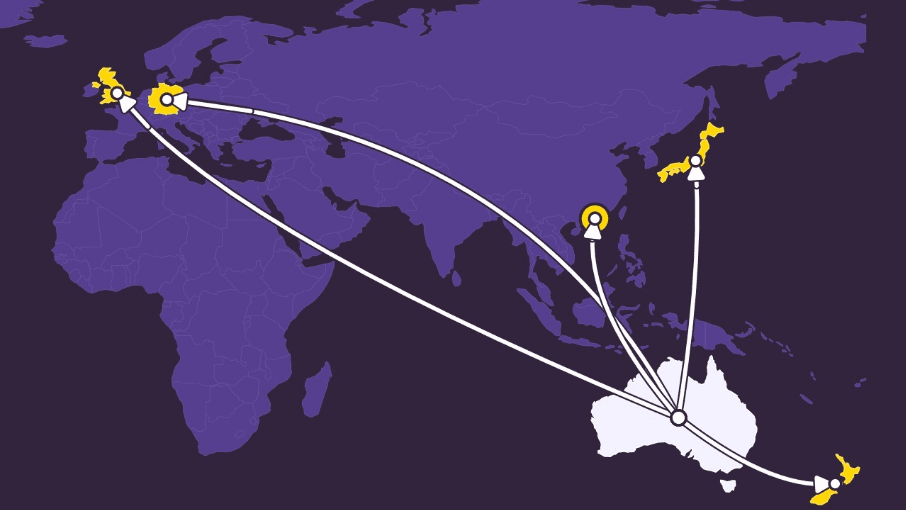
Take a fictional example of a Melbourne software company hiring a product manager in London in February 2027. Let’s look at what happens if they use a self-service platform with an AI assistant vs. an EOR provider backed by human experts like Safeguard Global.
Hiring through an automation-first EOR platform: The contract is generated in minutes from a template. Onboarding is smooth, the pay slips arrive on time, and the manager in Melbourne barely thinks about it. But in month five, the hire is struggling. The manager opens the platform’s AI assistant and asks how to end their employment. The system provides a notice letter and a final pay calculation, and the manager sends out the letter in month seven.
The platform did exactly what it was asked. But unfortunately, nobody asked it the right question. Under UK law, the employee now has unfair dismissal protection, a right to a documented performance process behind the decision, and compensation that is no longer capped. The software company is now at risk for legal action.
Hiring through a human-led provider: In this case, the employment contract comes from the same kind of template, but it is reviewed and customized by someone in the UK who ensures it follows the 2027 rules. In month three, the manager mentions a concern on a routine call. The specialist from the EOR provider points out that the six-month mark is approaching, explains what a fair process looks like, and helps the manager document two structured conversations. In month five, the hire either improves or leaves on agreed terms, and the company never faces a tribunal.
In both scenarios, the technology is used in almost identical ways. The difference is that with a human-led EOR provider, someone is positioned to see the problem, understand its implications, and advise the client about it.
Where automation earns its place
Of course, technology has its place. Payroll calculations, contribution remittances, document generation, leave tracking, and onboarding checklists are usually better done by software than by hand, and a provider that still runs them manually is slower and more error-prone for it.
But employment regulations are not always cut and dry. Human judgement is required to help determine legal lines like whether a dismissal is fair, a contractor is really an employee, or how upcoming labour code changes might affect your workforce.
NelsonHall’s analyst made the same point when explaining Safeguard Global’s Leader position, describing a provider able to “combine global technology capabilities with deep in-country expertise”. Technology carries the routine so the experts have time for the exceptions.
Four tests for a 2027 EOR shortlist
Ask a judgement question, not a factual one. Every EOR provider can probably tell you the statutory notice period in the UK. Instead, ask a question like what they would advise if your London hire was underperforming in month four. Listen for whether the answer comes from a person with an opinion or a system with a link.
Ask who owns the entity. A provider employing through its own entity in the destination is accountable for the employment. One that subcontracts to a local partner adds a link in the chain at exactly the point where you need a single party answerable.
Ask what they changed in January. Employment laws change each year. For example, a provider paying attention to the UK will have revised its contract templates and its guidance on probation and performance management for the 2027 rules. If they cannot say what changed, they are not watching.
Ask what the fee includes. Safeguard Global EOR starts from $499 USD per employee each month, with the level of support shaping the final figure. Before comparing quotes, it is worth costing the role itself in each candidate market with Intelligent Workforce, Safeguard’s free tool that sets live salary benchmarks against employer costs and benefits expectations.

Where Safeguard Global stands
Safeguard Global was named a Leader in NelsonHall’s 2026 Global EOR Services assessment in both the Overall and the Mid-Market segments, the second of which is the one most Australian scale-ups will recognise themselves in.
The service model behind that result is deliberately human-led. Australian clients work with an Australia-based team in their own time zone, backed by more than 400 experts based in the countries where your people work. The software handles payroll and paperwork. People handle the decisions where a wrong call ends up in front of a tribunal.
One question to take into every provider meeting
If you remember nothing else from a shortlisting process, ask each provider this: “When my manager in Australia has a difficult conversation coming up with an overseas employee, who do they call, and what do they know about that country?”
The answer tells you more about how the next three years will go than any feature list.
Frequently asked questions (FAQs)
More Resources




Talk to Sales
Book a demo today
We’d love to learn more about your needs and show you how we can help. Submit the form and we’ll be in touch to schedule a personalized demonstration of our platform and services.
Schedule an appointment
Fill out the form to speak to a rep about how we can help your organization.
