




Hiring in Malaysia for Singaporean Companies: 2026 EOR and Compliance Guide


Key takeaways
- The Johor-Singapore Special Economic Zone, introduced in January 2025, covers more than 3,500 square kilometres across nine flagship areas in Johor, Malaysia, targeting eleven sectors. It offers Singaporean businesses a unique opportunity to tap the skills and resources of neighboring Johor.
- Notice on termination in Malaysia runs four, six, or eight weeks by length of service, and severance is calculated separately at ten, fifteen, or twenty days’ wages.
- The working week in Malaysia is capped at 45 hours, and overtime is limited to 104 hours a month, paid at 1.5, 2, or 3 times the regular wage depending on when the employee worked overtime.
- Malaysia runs the Employees’ Provident Fund rather than the Central Provident Fund, and unjust dismissal is an active and frequently used concept.
- Safeguard Global’s Employer of Record works through its own Chinese entity with local specialists behind it, drawing on a network operating across 187 countries.
Four weeks, six weeks, eight weeks; ten days, fifteen days, twenty days; forty-five hours, one-hundred-and-four hours: Those are the numbers that decide what a Malaysian hire actually costs a Singaporean company, but they don’t always align with the assumptions of Singaporean employers.
Malaysia is the most natural expansion a Singapore-based company ever makes. It sits next door, shares a great deal of commercial culture, operates comfortably in English, and offers salary and office costs that make a regional team far easier to justify. Many Singaporean businesses already sell there. Employing there is where the assumptions start to cost money and where a provider like Safeguard Global stops them from turning into liabilities.
The case for Malaysia has rarely been stronger
Malaysia is not a speculative market for Singaporean businesses, it is an extension of the home economy. The total value of Singapore's direct investment abroad stood at about $1,302 billion USD at the end of 2024, with Asia taking roughly $682 billion USD, or 52.4%, more than any other region. Malaysia is among the most popular destinations for those investments, and the daily movement of workers and goods across the Causeway makes it one of the busiest land crossings anywhere.
The case for Malaysia strengthened considerably in January 2025, when both governments signed the Johor-Singapore Special Economic Zone agreement. The zone covers more than 3,500 square kilometres, over four times the size of Singapore itself, and it’s organised around nine flagship areas targeting eleven sectors including manufacturing, logistics, the digital economy, financial services, and healthcare. The intent is to let a business operate on both sides of the border and treat the two sides as a single operating base.
That shifts the question from whether to hire in Malaysia to how quickly a team can be put in place compliantly.
How much written notice is needed in Malaysia?
Written notice of termination scales with service: four weeks for someone who has worked less than two years, six weeks for someone who has served two to five years, and eight weeks for someone who has worked more than five years. The worker must normally be warned and given a proper hearing before the relationship ends, and just cause takes in theft, bribery, insubordination, habitual negligence, and lack of capability.
The phrase that deserves attention is “unjust dismissal.” It is a real and frequently used concept in Malaysia, which means both the reasons for ending employment and the manner of doing it are open to challenge.

How much severance is required in Malaysia?
Severance sits separately from notice and has its own scale. Employees with at least one year of service are entitled to termination benefits. Severance payments are calculated as 10 days’ wages for one to two years of service, 15 days’ wages for two to five years, and 20 days’ wages beyond five years of service. There is no statutory gratuity payment beyond that, though a contract or collective agreement can provide more.
The practical lesson is that a Malaysian exit is a costed, procedural exercise rather than a conversation, and the cost is knowable in advance if anyone bothers to look it up.
How long is the standard workweek in Malaysia?
The standard working week runs to 45 hours across five or six days, with a legal maximum of eight hours per day. Employees are entitled to a break of at least 30 minutes after five consecutive hours and to at least one full day off each week.
Overtime is capped at 104 hours per month and must be paid at 1.5 times the regular wage on normal working days, twice the regular wage on rest days, and three times the regular wage on public holidays. Those multipliers belong in the operating model from the start, not in a variance report after the first long weekend. Probation is not defined in statute but is standard practice, typically three to six months.
What does Malaysia’s Employment Act mean for employers?
The Employment Act of 1955 is Malaysia’s primary employment law. Under the country’s employment laws, permanent contracts must cover paid leave, contributions to the Employees’ Provident Fund, and protection against unjust dismissal. Fixed-term contracts carry the same entitlements as permanent ones, and repeated renewals without justification may be treated as permanent employment, so a company that’s planning on rolling one-year agreements to preserve flexibility is building toward permanence without intending to. Malaysia also runs apprenticeship contracts for structured training under the same act.
Contributions are the other structural difference. In place of Singapore’s Central Provident Fund, Malaysia operates the Employees’ Provident Fund, and Singaporean employers need to adjust for this.
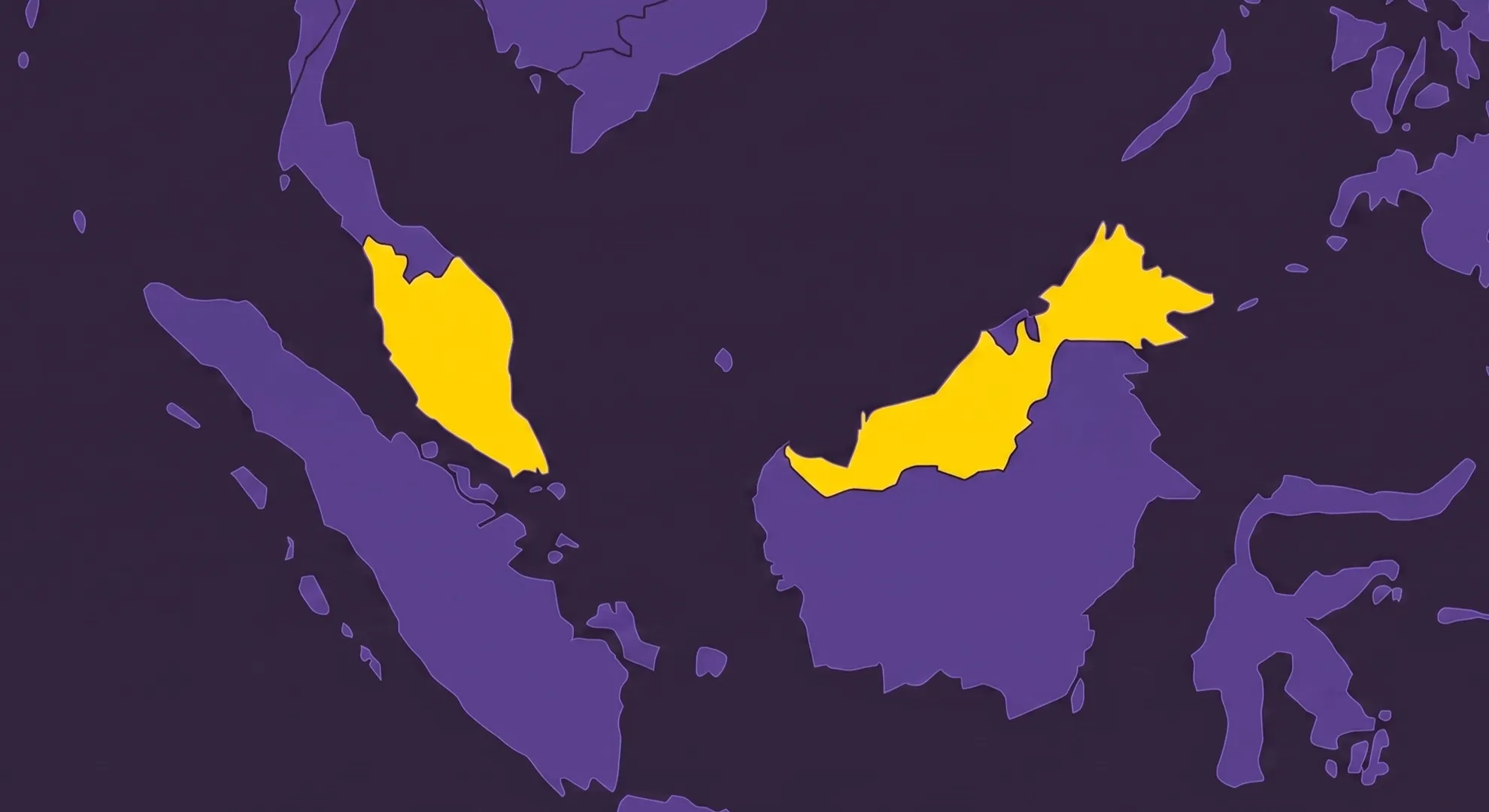
Two countries, two sets of rules
Because the business conversation feels familiar, Singaporean employers assume the employment framework will behave like their own. Every number above says otherwise. The single most useful adjustment is to stop treating Malaysia as a variation on Singapore’s model and start treating it as a separate jurisdiction that happens to be close by.
Malaysia is also not especially difficult to incorporate in, which is precisely why companies rush into it. A local entity requires registration, ongoing filings, statutory reporting, and local compliance capability — a heavy standing commitment for a team of two or three while you are still establishing whether the market justifies it. Engaging people as contractors is the other instinct, and, in a country with an active concept of unjust dismissal, it’s the more dangerous one.
One partner on both sides of the Causeway
An employer of record avoids both traps. Through its Malaysian entity, the provider issues a contract that’s compliant with the Employment Act, registers the employee for the Employees’ Provident Fund, runs payroll, and applies the correct overtime multipliers. It also manages the notice, hearing, and severance requirements at the end. Your team directs the work.
Because Malaysia is such a common first move, it attracts EOR providers of every quality, including many that subcontract the actual employment to a local agency. In a jurisdiction where dismissal is scrutinised and severance is prescribed, that extra link is a genuine weakness. Safeguard Global employs through its own entities in both Singapore and Malaysia, so one provider covers both sides of the Causeway and accountability never gets passed down a chain. With the Special Economic Zone pulling the two markets closer together, one partner covering both is worth considerably more than two providers covering one each.
Experience is the other half. With 18 years in business and over 400 specialists stationed around the world, Safeguard Global already knows how to manage complex cases such as a fixed-term arrangement approaching permanence, a dismissal that has to withstand a hearing, or a role straddling both sides of the border. A heavily automated platform will action an instruction to end a contract and say nothing about the hearing you owed the employee or the severance, either.
Calculate your costs before you compare
Malaysia’s appeal rests on a cost advantage that only holds if you have calculated properly. Intelligent Workforce, a free tool from Safeguard Global, gathers live salary benchmarks alongside employer costs and benefits expectations, so a Johor role can be set against its Singapore equivalent or against Kuala Lumpur, with provident fund contributions and overtime exposure already visible rather than discovered later.
The fee runs from $499 USD to $800 USD per employee monthly, according to service level. Against Malaysian salary levels, that is a visible line, which is exactly why the cheapest provider is tempting. But an unjust dismissal finding, an unpaid provident fund contribution, or a fixed-term arrangement quietly converting to permanent employment can easily exceed that cost and arrive with disruption attached.

Frequently asked questions (FAQs)
More Resources




Talk to Sales
Book a demo today
We’d love to learn more about your needs and show you how we can help. Submit the form and we’ll be in touch to schedule a personalized demonstration of our platform and services.
Schedule an appointment
Fill out the form to speak to a rep about how we can help your organization.