




Hiring in China for Singapore Companies: 2026 EOR and Compliance Guide

Key takeaways
- Singapore's direct investment abroad reached about $1,302 billion USD at the end of 2024, with Asia taking roughly $682 billion USD, or 52.4%, more than any other region.
- Fixed-term employees in China are generally entitled to the same statutory benefits as those on open-ended contracts, so a shorter contract offers flexibility rather than a saving.
- Overtime is paid at 150% on ordinary workdays, 200% on rest days, and 300% on statutory public holidays. Social insurance contribution bases differ from city to city.
- Safeguard Global’s Employer of Record works through its own Chinese entity with local specialists behind it, drawing on a network operating across 187 countries.
After an employee has completed two consecutive, fixed-term contracts or ten years of continuous service, the employer is generally required to offer the employee an open-ended contract. That single provision explains more about employing in China than any other, and it is the one Singapore companies tend to discover late.
The Chinese market is full of opportunity for global businesses, yet it is one of the most demanding places to employ people. For a Singapore business, the market is close, commercially significant, and culturally more accessible than it is for most Western companies. Many Singapore firms already trade there. But employing there is a different exercise.
Why do Singaporean companies choose China?
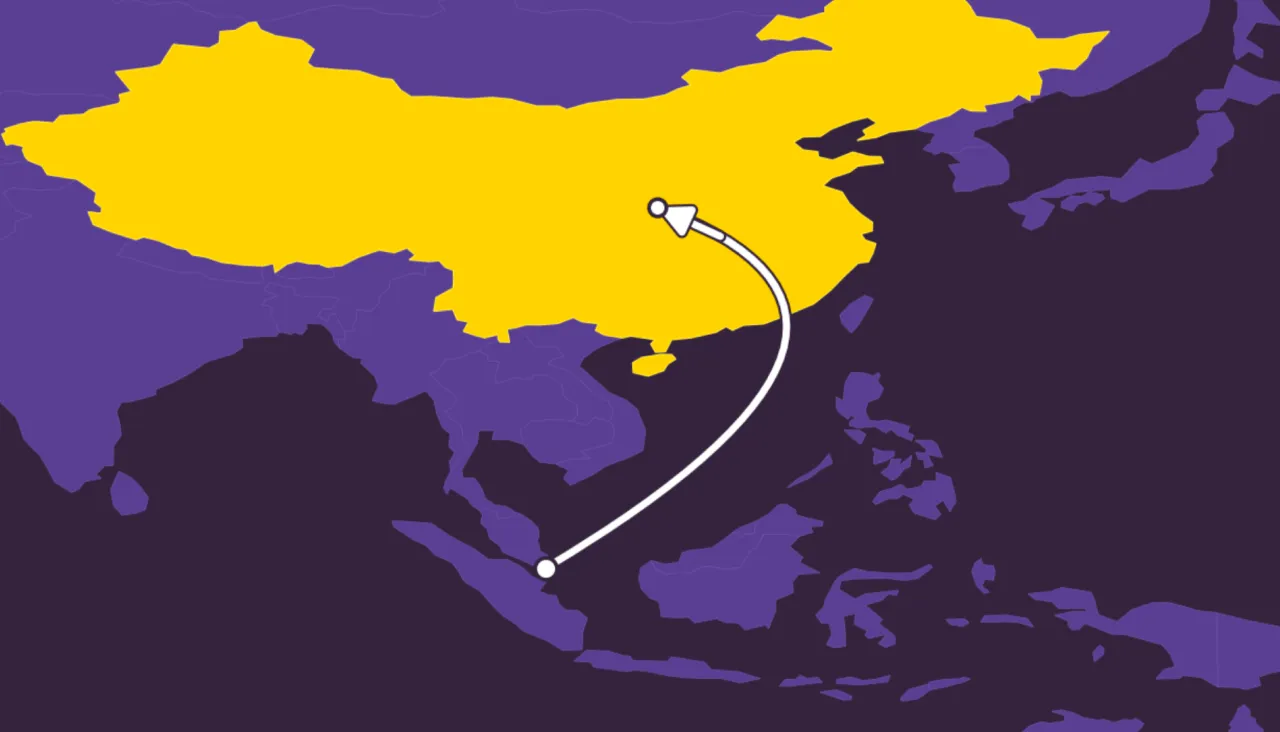
The total value of Singapore's direct investment abroad reached about $1,302 billion USD at the end of 2024, up 7.6% on the previous year, with Asia dominant at roughly $682 billion USD, or 52.4% of the total. Singapore companies commit more capital within their own region than anywhere else in the world. China sits at the centre of that weighting. The two economies are deeply entwined, with Singapore consistently among the largest sources of new foreign investment into China and China among Singapore’s most significant trading partners. The commercial question isn’t whether China matters; it’s whether the company is ready for what’s involved in employing people there.
Back to the ten-year rule
Chinese employment contracts are either fixed-term or permanent. Permanent, open-ended contracts must include social insurance, housing fund contributions, paid leave, and severance pay. Fixed-term employees are eventually entitled to the same benefits as permanent staff, which removes the cost savings a Singapore employer might expect from a shorter arrangement in the first place.
So, the fixed-term contract buys flexibility rather than savings, and only for a limited time. After two consecutive fixed-term contracts or ten years of continuous service, the obligation to offer permanence generally surfaces. A company keeping a valued employee on rolling annual agreements is operating on a timetable that ends in permanence, whether or not anyone has noticed.
This is not a loophole to be managed. It is a structural feature to be planned around, ideally before the second renewal rather than during it.
Ending employment is a process
Chinese law generally calls for 30 days’ written notice of termination, or 30 days’ salary in its place, and the employee must usually be warned and heard properly beforehand. Just cause for termination covers conduct such as theft, bribery, insubordination, and habitual negligence of duty, and the employer carries the burden of demonstrating it.
Severance is a statutory feature of the system rather than a negotiated courtesy. For a Singapore employer used to a more straightforward parting, a dismissal that’s commercially justified but procedurally sloppy is the one that generates a dispute.
The numbers that belong in the model
Rates for overtime are set. Ordinary workdays are paid at 150% of the regular wage. Rest days are paid at 200% where no compensatory leave is given. Statutory public holidays are paid at 300% of the regular wage. Companies running shift or on-call cover in China often miss this until the first public holiday lands and payroll comes in at three times the usual rate.
Employer contributions cover pensions, medical care, unemployment, work injury, and maternity insurance. Additionally, the housing fund contribution and Individual Income Tax (IIT) are withheld from salaries before payment and remitted to the relevant authorities.
The same country, different cities
Contribution bases and rates differ between cities, which is a detail companies often get wrong because they expect a single national rate. An arrangement designed for Shanghai does not necessarily transfer to Shenzhen or Chengdu, and a transfer between cities is a compliance event rather than an administrative one.
This local variation is why a generic approach does not work in China. The rules depend on where the employee sits.
Renting the expertise instead of building it
Establishing a Chinese entity is a serious undertaking involving registration, capital considerations, local banking, and ongoing compliance obligations, and it is a heavy commitment for a company still testing whether the market will repay the effort. Engaging people as contractors is riskier still in a system built around employment protection and formal contracts.
The Safeguard Global Employer of Record (EOR) already holds an entity in the jurisdiction, so it can issue a compliant contract, register the employee for social insurance and the housing fund, run payroll with correct IIT withholding, apply the right overtime multipliers, and manage the notice and hearing requirements at the end. The work stays under your direction, and you keep the option to build your own structure later, once you know the market is worth it. Safeguard Global supports both ends of that journey, which is something to note before signing with a provider that only covers the first part.
Why ownership and local knowledge both matter here
China is a market where a provider’s actual footprint counts because local variation and formal processes don’t allow for a country-wide template. Providers who subcontract the employment to a local agency add a link exactly where you need direct accountability. Safeguard Global works through its own legal entities in the markets that count, with local specialists behind them who know how the rules land on the ground rather than how they read on paper.
The breadth of the network is the other consideration. You can be sure that a company operating across 187 countries has already met the specific situation you are facing, whether it’s a contract approaching its second renewal, a transfer between cities with different contribution rules, or a dismissal that has to withstand scrutiny. A heavily automated platform can action your instruction, but it will likely miss the exceptions and nuances that local experts have mastered.
Understanding the cost
Before committing to a city, understand what the role will actually cost, because contribution bases and salary levels differ so much between Chinese locations. Intelligent Workforce, which Safeguard Global provides at no charge, sets live salary benchmarks against genuine employer costs, so Shanghai can be weighed against Shenzhen or against keeping the role closer to home, before an offer goes out.
The fee itself falls between $499 USD and $800 USD monthly per employee, depending on the service taken. Cheaper services exist, and most work through borrowed local firms. What really counts is how the EOR handles a dispute, an unpaid contribution finding, or an unplanned move to permanent employment. These scenarios are expensive enough that they can easily wipe out any savings you achieved with a lower-cost provider.

Plan for the second renewal now
Everything in this article points the same way. China’s rules are published, applied firmly, and entirely survivable provided you plan for them rather than get bitten by them. Know which city the role sits in. Model the overtime multipliers, if relevant. And decide what happens at the second renewal while it is still a choice.
Approached that way, with Safeguard Global holding the employment foundation underneath it, China remains the most significant growth market available to a Singapore business and an entirely manageable one.
Frequently asked questions (FAQs)
More Resources




Talk to Sales
Book a demo today
We’d love to learn more about your needs and show you how we can help. Submit the form and we’ll be in touch to schedule a personalized demonstration of our platform and services.
Schedule an appointment
Fill out the form to speak to a rep about how we can help your organization.