




The ROI of EOR Services: A Mid-Market CFO Perspective

For finance leaders, global hiring decisions rarely begin with talent strategy. They begin with capital allocation.
Entering a new country creates a familiar question: Should the company establish a legal entity, or hire through an Employer of Record (EOR)? Both paths support international hiring, but they produce very different financial profiles. The first requires fixed infrastructure. The second converts those costs into an operating expense.
This distinction is where the ROI of EOR services becomes meaningful for mid-market CFOs. The calculation goes well beyond vendor fees. It involves avoided infrastructure costs, reduced compliance risk, and the economic impact of hiring faster in new markets.
Organizations evaluating EOR models often underestimate the full financial picture. When the analysis expands to include risk-adjusted costs and opportunity costs, the economics tend to shift quickly. Understanding these variables allows finance leaders to build a stronger financial case for EOR global hiring when presenting the model internally.
Key takeaways
- Entity setup is a capital commitment: Establishing and maintaining foreign entities introduces fixed legal, tax, and administrative overhead regardless of hiring scale.
- EOR converts fixed costs into variable costs: The EOR model eliminates entity formation expenses while providing compliant hiring infrastructure immediately.
- Time-to-market drives meaningful financial impact: Faster hiring can produce revenue lift and reduce vacancy costs that rarely appear in initial ROI calculations.
- Risk-adjusted ROI matters as much as direct cost savings: Payroll penalties, tax exposure, and misclassification risks carry real financial consequences that using an EOR helps mitigate.
How CFOs calculate the ROI of employer of record services
CFOs rarely evaluate international hiring models based on service pricing alone. Instead, they model three financial layers:
- Direct operating costs
- Avoided infrastructure costs
- Risk-adjusted financial exposure
When evaluating the ROI of EOR services, finance teams typically build a model around four questions:
- What does it cost to establish and maintain an entity?
- What does the EOR service fee replace?
- How quickly can hiring begin?
- What compliance exposure does the organization carry?
The answers determine whether the EOR model represents an expense or an operational accelerator. In many cases, the real ROI emerges from costs that disappear entirely when an entity is no longer required.
Direct cost savings: EOR cost savings vs entity setup
The most immediate financial difference between hiring through an EOR and establishing an entity lies in infrastructure.
Launching a legal presence in a new country requires a combination of regulatory registration, tax administration, and operational setup. Even modest expansions can involve:
- Legal entity registration
- Local directors or corporate representatives
- Bank account establishment
- Payroll registration
- Employment law compliance reviews
- Accounting and tax filings
The cost structure typically includes both upfront formation expenses and recurring administrative overhead.
These costs remain largely fixed regardless of whether the company hires one employee or fifty.
Using an EOR (Employer of Record) solution removes the need to establish that infrastructure. The EOR becomes the legal employer in the country while the client company directs the employee’s work.
The direct financial impact usually includes:
- Entity formation avoidance: Legal, registration, and advisory costs eliminated.
- Reduced administrative overhead: No need for ongoing corporate maintenance.
- Lower payroll compliance costs: Payroll processing and statutory reporting handled locally.
- Fewer tax and legal advisory fees: Regulatory expertise embedded in the service.
For finance leaders modeling EOR cost savings vs entity setup, these avoided costs often represent the largest portion of the ROI.
The indirect financial benefits CFOs often underestimate
Direct cost comparisons rarely tell the full story. In internal investment reviews, finance teams often focus on vendor pricing while underestimating the economic impact of speed and operational simplicity. Let’s take a look at three indirect factors that frequently change the financial outcome.
Faster market entry
Entity formation timelines vary widely by jurisdiction. In many countries, establishing a compliant legal presence can take several months before hiring is possible. During that time, the company cannot legally employ staff or begin local operations.
EOR models remove this delay.
By partnering with an EOR like Safeguard Global, companies can typically hire in weeks rather than months, allowing revenue-generating teams to begin work immediately. Especially for organizations expanding into sales, engineering, or market-entry roles, faster hiring can produce measurable revenue acceleration.
Reduced vacancy costs
Every unfilled role carries an economic cost. For revenue roles, the impact appears as delayed pipeline generation. For technical roles, it can slow product development and delay releases.
Accessing global talent through an EOR expands the hiring pool while shortening the time to productivity. The financial effect compounds quickly when expansion involves multiple hires across new regions.
Internal bandwidth recovery
International hiring through entities often requires significant internal involvement.
Finance, HR, and legal teams must coordinate on:
- Payroll registration
- Employment contracts
- Tax reporting
- Benefits administration
- Ongoing regulatory monitoring
The EOR model transfers much of that work to specialists with local expertise. For CFOs managing lean finance teams, the recovered time can be substantial.
How EOR reduces compliance and payroll-related financial risk
Risk rarely appears as a line item in early ROI models. Yet compliance exposure can easily exceed the operational cost of global hiring.
Common risk areas include:
- Worker misclassification
- Incorrect payroll tax filings
- Failure to meet statutory benefits requirements
- Improper termination procedures
- Data protection violations
These risks carry penalties that vary by jurisdiction but often include fines, back payments, and regulatory scrutiny. An experienced EOR provider maintains local compliance infrastructure across multiple areas:
- Payroll administration
- Employment law compliance
- Benefits and statutory contributions
- Regulatory reporting
Because the EOR acts as the legal employer, it assumes responsibility for maintaining compliance with local regulations. For finance leaders, this translates into reduced probability of unexpected financial liabilities.
A practical model: EOR vs entity 3-year cost comparison
A useful way to evaluate the employer of record ROI for mid-market organizations is to compare costs over two horizons.
Year one comparison
Typical cost structure for establishing an entity:
- Legal and registration fees
- Local accounting expertise
- Local HR & benefits support
- Payroll system implementation
- Ongoing legal consultation
- Corporate governance requirements
These expenses occur before the first employee is hired. In contrast, the EOR model begins with operating costs tied directly to employee payroll.
The financial profile often looks like this:
Entity model (year 1)
- High upfront infrastructure costs
- Administrative overhead regardless of headcount
- Delayed hiring timelines
EOR model (year 1)
- Minimal startup cost
- Monthly service fees tied to employees
- Immediate hiring capability
In early-stage international expansion — especially when hiring one to five employees — the EOR model typically shows stronger ROI.
Three-year comparison
The calculus can shift at larger hiring volumes. If a company plans to build a large workforce in a single country, the fixed infrastructure cost of an entity becomes less significant over time.
This is why CFOs often model EOR vs entity 3-year cost comparison scenarios.
Typical patterns include:
- Small teams (1–15 employees): EOR usually remains financially advantageous.
- Mid-size teams (15–30 employees): Break-even analysis becomes more relevant.
- Large teams (30+ employees): Entity setup may become cost-effective if your organization anticipates a permanent presence in the area.
Many companies use EOR as an initial expansion model and later transition to entity structures if local headcount grows significantly. This phased approach allows organizations to test markets before committing capital.
Addressing the CFO objections that slow EOR adoption
Finance leaders evaluating EOR models often raise three consistent questions.
These objections tend to focus on financial predictability and transparency.
“Are EOR fees higher than entity costs?”
EOR fees are typically structured as a predictable monthly cost.
Entity models, by contrast, create numerous variable expenses such as legal fees, registration costs, and administrative overhead — not to mention compliance penalties and costs to fix errors that are common when businesses move to new areas. Because of this, predictability often becomes the deciding factor in choosing EOR for finance teams managing multiple international operations.
“Can we audit and track employee costs if we’re using an EOR?”
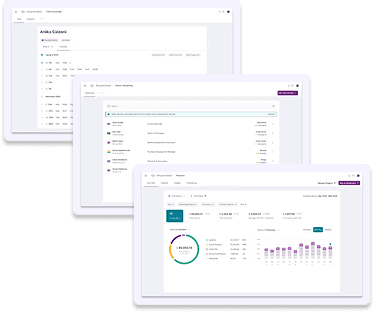
EOR service providers like Safeguard Global provide more than just a legal way to employ workers in a country where you don’t have a legal entity. They provide cloud-based platforms that let you see your international workforce at a glance. EOR platforms like those offered by Safeguard Global provide detailed dashboards and analytics around items like headcount, job roles, and payroll. New AI applications in EOR include personalized recommendations for where to hire next, what roles to prioritize, and how to better align your workforce strategy with your organization’s goals.
For CFOs responsible for financial oversight, the centralized visibility that EOR provides becomes a significant operational advantage.
“Will using an EOR create long-term operational dependency?”
The EOR model does not prevent entity creation. In fact, many organizations use EOR services as a temporary operating structure while assessing market potential, thereby reducing strategic risk. If hiring scales, they then transition to setting up a legal entity. Safeguard Global is one of the only EOR providers to also offer entity setup, making the transition even easier.
Building a stronger financial case for EOR global hiring
The most effective ROI models extend beyond cost comparison. The goal isn’t simply to reduce hiring costs. It’s to allow companies to expand globally with financial clarity — and without building infrastructure they may not yet need.
CFOs building the internal business case for EOR typically include:
- Direct cost savings: Avoided entity formation and administrative costs
- Operational acceleration: Faster hiring timelines and market entry
- Risk mitigation: Reduced exposure to compliance penalties
- Productivity gains: Less internal time spent managing international employment
For mid-market companies expanding internationally, the combination of these factors often produces a compelling financial outcome. Safeguard Global helps organizations model these scenarios using real-world hiring data, including salary benchmarks and employment cost structures across nearly 190 countries. Contact us today to learn more.
Frequently asked questions (FAQs)
More Resources




Contact Us
Book a demo today
We’d love to learn more about your needs and show you how we can help. Submit the form and we’ll be in touch to schedule a personalized demonstration of our platform and services.
Schedule an appointment
Fill out the form to speak to a rep about how we can help your organization.