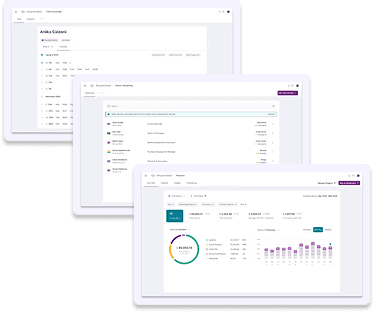





Multi-Country Payroll Management for Finance and Payroll Leaders

Key Takeaways
- Centralized control is needed for multi-country payroll management, even when execution is local.
- Pay close attention to compliance; it’s the primary risk driver in international payroll.
- Standardize your payroll operations to reduce errors and improve scalability.
- The right multi-country payroll provider can simplify and improve visibility.
As organizations expand globally, payroll becomes one of the most complex and high-risk operational functions. What works domestically rarely scales internationally without errors and friction.
For finance and payroll managers, multi-country payroll management requires balancing compliance, accuracy, reporting visibility, and efficiency across multiple jurisdictions.
But how do you actually manage payroll across countries successfully?
What’s the best way to run global payroll?
How do companies ensure payroll compliance abroad?
And what are the real challenges of multi-country payroll?
This blog answers those questions and outlines actionable global payroll best practices to help you build a compliant and scalable international payroll operation.
Why is multi-country payroll so complicated?
Before discussing solutions, it’s important to understand why payroll across countries is so complex.
1. Country-by-country tax rules
Every jurisdiction operates under its own tax code. Income tax brackets, employer contributions, employee deductions, and benefit taxation vary widely from country to country. Sometimes laws at the state/province and municipal levels must also be considered.
International tax withholding payroll requires the accurate calculation of:
- Income tax withholding
- Employer and employee social contributions
- Local or municipal taxes
- Supplemental wage taxation
- Benefits-in-kind reporting
Tax authorities regularly update rates and thresholds, which makes local expertise invaluable.
2. Different pay frequencies
Most countries require employees to receive wages or salaries at least once a month. In some countries, employers pay their workers only once a month, but in others, biweekly or semi-monthly cycles are possible. In some places, wage earners must be paid on a weekly basis. Additionally, certain regions require 13th- or 14th-month salary payments.
Managing different pay frequencies across jurisdictions creates complexity in:
- Cash flow forecasting
- Accrual management
- Payroll calendar coordination
- Consolidated reporting
For global organizations that manage distributed workforce payroll, even a single delayed submission can disrupt multiple country cycles.
3. Varying reporting obligations
Payroll reporting deadlines differ by country and often include:
- Monthly tax remittance filings
- Social insurance reporting
- Annual wage summaries
- Real-time digital payroll submissions (in some countries)
Year-end reporting requirements can vary significantly in format, timing, and documentation.
This fragmentation is why global payroll consolidation becomes essential for finance leaders who need unified reporting visibility.
What are the specific challenges of multi-country payroll?
The most common international payroll challenges include:
- Regulatory complexity across jurisdictions
- Lack of centralized data visibility
- Vendor fragmentation
- Currency management
- Misclassification risk
- Permanent Establishment (PE) exposure
- Integration gaps between HR and payroll systems
Payroll errors abroad often lead to financial penalties, reputational damage, and employee dissatisfaction. Managing these challenges requires structure, not just software.
How do you manage multi-country payroll?
Effective multi-country payroll management relies on centralized governance combined with local execution. The steps below tell you how companies manage it successfully.
1. Establish central payroll governance
Even if payroll processing is local, oversight should be centralized. This includes:
- Standard global payroll calendars
- Defined approval workflows
- Uniform reporting templates
- Clear roles and escalation paths
By centralizing governance, you can reduce inconsistency and ensure alignment with global financial controls.
2. Standardize payroll workflows for global teams
Strong payroll workflows for global teams include:
- Documented cutoff dates
- Pre-payroll data validation checkpoints
- Approval controls before payroll release
- Post-payroll reconciliation procedures
Standardize your workflows and you’ll see that it improves predictability, especially when multiple jurisdictions need to be managed simultaneously.
3. Integrate HRIS with global payroll systems
One of the most overlooked best practices for global payroll is system integration. Manual data transfers between HR, payroll, and finance systems increase error rates and reduce audit traceability.
To follow best practices, you should:
- Integrate HRIS directly with payroll systems.
- Automate employee data updates.
- Map payroll output to your global chart of accounts.
- Ensure audit trails for every payroll adjustment.
Relying on accurate, automated data flow results in stronger control and compliance.
What’s the best way to run global payroll?
The best way to run global payroll is through a consolidated, scalable infrastructure that combines local expertise with centralized visibility.
There are three common approaches:
- Managing separate in-country payroll vendors
- Building in-house payroll teams in each country
- Partnering with a multi-country payroll provider
For most growing companies, the third approach delivers the most operational efficiency.
A modern multi-country payroll solution should provide:
- Centralized dashboards
- Unified global reporting
- Standardized data formats
- Multi-currency support
- Compliance tracking
This enables global payroll consolidation, giving finance leadership visibility into total labor costs across regions. The goal is not just payroll processing; it’s also strategic workforce cost control.
How do companies ensure payroll compliance abroad?
Ensuring payroll compliance across countries requires proactive risk management. You should pay close attention to the following payroll compliance fundamentals to ensure compliance with local laws in the jurisdictions that apply to you.
1. Withholding accuracy
Accurate tax withholding is essential, and for this, you must validate tax tables, employee classification, benefit taxation rules, and supplemental income handling. Errors in withholding can result in penalties or employee disputes.
2. Social contributions
Employer and employee contributions to social security systems vary widely from one country to the next. To get it right, you must ensure accurate contribution calculations, timely remittance, and proper reporting to local authorities.
Late or incorrect payments often trigger automatic penalties.
3. Year-end reporting requirements
Each country has specific year-end documentation requirements for employees and tax authorities. These can include annual wage statements, employer tax reconciliations, government filings, and mandatory disclosures. You can reduce risk by keeping country-specific compliance calendars. These are especially helpful during peak reporting seasons.
Payroll operations best practices
Multi-country payroll management requires operational discipline. The following best practices can help you achieve this discipline.
1. Standardize processes across countries.
While tax laws differ, your internal controls should not. Standardization includes uniform approval chains, consistent data validation processes, and defined payroll review cycles. Consistency reduces variance and improves audit readiness.
2. Consolidate payroll vendor management.
Managing multiple local vendors increases complexity, but by consolidating under a single multi-country payroll provider, you can reduce your contract administration burden, fragmented communications, and reporting inconsistencies. A consolidated model simplifies service oversight and performance tracking.
3. Ensure data accuracy and audit trails.
Audit readiness is critical for finance teams, and the best practices that support this include:
- Automated reconciliation reports
- Segregation of duties
- Documented payroll adjustments
- Secure payroll data storage
With strong audit trails, you can protect against internal errors and external regulatory reviews.
Risk reduction strategies
Global payroll risk extends beyond processing accuracy. To effectively reduce risk, you’ll need to avoid payroll penalties, prevent misclassification, and monitor Permanent Establishment (PE) risk.
Avoiding payroll penalties
To avoid fines and interest charges:
- Monitor filing deadlines closely.
- Automate statutory payment reminders.
- Conduct periodic compliance audits.
- Proactive monitoring reduces regulatory exposure.
Preventing misclassification
Hiring contractors instead of employees in foreign markets can trigger compliance violations. The proper classification is essential because it ensures the correct tax withholding, compliance with social contribution rules, and protection against retroactive liabilities.
Misclassification penalties can significantly outweigh payroll processing costs, so it pays to get it right.
Monitoring Permanent Establishment (PE) risk
When employees generate revenue or negotiate contracts abroad, they may trigger PE risk — meaning the company could owe corporate tax in that country.
Your payroll and finance leaders must coordinate with tax and legal teams to monitor employee authority levels, revenue-generating activities, and duration of presence. Ignoring PE risk can create unexpected corporate tax exposure.
How EOR or global payroll providers simplify multi-country payroll
For many organizations, partnering with an employer of record (EOR) or global payroll provider simplifies multi-country payroll management dramatically. Here are some of the benefits that can be gained from such a partnership:
1. One system for multiple countries
A consolidated solution provides central dashboards, standardized reporting, and unified payroll workflows. This reduces data silos and improves transparency.
2. Localized compliance expertise
With EORs and experienced global providers, you get in-country payroll specialists, regulatory monitoring, tax update management, and compliance advisory support. This often solves some of the biggest challenges associated with payroll compliance across countries.
3. Unified reporting for finance leadership
Perhaps most importantly, a consolidated provider enables global payroll consolidation, multi-currency reporting, consolidated labor cost insights, and standardized analytics. As a result, finance leaders gain real-time visibility into global payroll exposure — improving budgeting and forecasting accuracy.
Final thoughts: Building a sustainable strategy for global payroll management
As a quick recap, to manage multi-country payroll effectively, you need to combine:
- Central governance
- Standardized global workflows
- Strong compliance controls
- Integrated systems
- Consolidated provider partnerships
The best way to run global payroll is not through fragmented country-by-country processes, but through a structured framework that is supported by reliable multi-country payroll solutions. As organizations expand their global footprint and support distributed teams, payroll becomes more than a back-office function. It becomes a risk management strategy, a compliance safeguard, and a source of financial insight. Strong multi-country payroll management turns complexity into control and control into confidence. Contact Safeguard Global to learn how we can reduce your multi-country payroll challenges.
Frequently asked questions (FAQs)
More Resources




Contact Us
Book a demo today
We’d love to learn more about your needs and show you how we can help. Submit the form and we’ll be in touch to schedule a personalized demonstration of our platform and services.
Schedule an appointment
Fill out the form to speak to a rep about how we can help your organization.