




How to Evaluate EOR Providers: 12-Point Checklist | Evaluation Framework + Checklist

An EOR decision transfers more than administrative work — it transfers legal accountability. When you hire through an employer of record, you’re relying on that provider to execute local labor law correctly, move money accurately across borders, and protect your organization from penalties that compound quickly. The difference between vendors isn’t marketing language or flashy platforms. It’s operational rigor in each jurisdiction you care about.
Key takeaways
- Treat your EOR provider comparison like vendor due diligence: Verify local capability, not just global coverage claims.
- Payroll quality is a leading indicator of service quality: Errors surface fast, and fixing them is expensive.
- The strongest employer of record selection criteria are evidence-based: ask for artifacts, samples, and escalation paths — not promises.
- Safeguard Global can help you take your EOR questions and turn them into concrete plans for your countries of interest.
A practical evaluation framework
Run your global employment partner evaluation the way you would any material risk decision — with defined scoring criteria and a bias toward scrutiny. Grade each vendor across four domains, then interrogate the weakest one until you’re satisfied it’s controlled. If it isn’t, that’s your answer.
- Compliance depth: Can the EOR provider lawfully act as the employer in each target country, and demonstrate how they maintain that compliance over time?
- Payroll and money movement: Are processes accurate and on time, with clear funding flows, audit controls, and no ambiguity around FX or reconciliations?
- Service delivery: Who is accountable day to day, where are they located, and what happens when something escalates?
- Commercials and risk allocation: What are you actually paying for, how are SLAs enforced, and who carries liability when there’s a failure?
What follows is a 12-point EOR vendor checklist. Use it as-is, or copy it into an RFP or buying committee scorecard.
The 12-point checklist to evaluate EOR providers
1) Legal employer structure in each country
Ask whether the provider employs workers through its own local entity, a partner entity, or a mix — and what governs that decision.
- What to request: A country-by-country disclosure of the EOR’s employing entity model (owned entity vs. partner), plus how they audit partners.
2) Proven in-country compliance capability
Compliance isn’t a policy document — it’s the disciplined application of local law in day-to-day operations.
- What to request: Sample locally compliant employment agreements for two countries you plan to hire in (redacted), plus the process they use to keep templates current.
3) Worker classification controls (especially contractors)
If your use case includes contractors, your EOR decision intersects with misclassification risk.
- What to request: Their classification questionnaire, decision criteria, and what happens if they decline to engage a contractor in a high-risk scenario. Look for a company that provides both EOR as well as Contractor Management.
4) Payroll accuracy, not payroll “capability”
Most vendors can run payroll. Fewer can run payroll cleanly across time zones, currencies, and changing statutory rules. At Safeguard Global, our experience in EOR is surpassed only by our long background in Global Pay.
- What to request: Their payroll error definition, historical error rate (even directional), and the operational steps when an error hits (same-day correction, off-cycle runs, employee comms).
5) Funding flow transparency
An EOR pays employees on your behalf. Make sure you map where money sits, when it moves, and who controls it.
- What to request: A financial timeline by country (cutoffs, pay dates), currency approach (local vs. foreign), example of unified payroll reporting, and what kind of controls exist (segregated client funds, approvals, reconciliations).
6) Benefits by country
Benefits aren’t menu items — they’re constrained by local norms, insurers, and eligibility rules. Find out what benefits the EOR provider offers in your target countries.
- What to request: A benefits summary for each target country showing statutory vs. supplemental benefits, typical employer cost ranges, enrollment lead times, and what benefits information employees see during onboarding.
7) Onboarding quality and employee experience
A well-designed onboarding experience reduces early-stage attrition, reinforces trust with new hires from day one, and limits the reactive support load that otherwise falls back on your internal HR team.
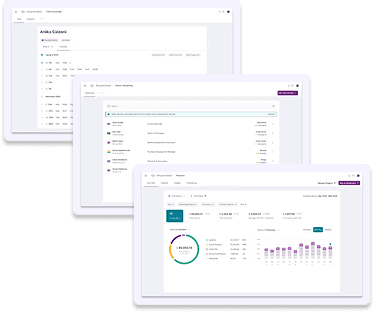
- What to request: A step-by-step onboarding walkthrough (screens + timeline), the employee-facing support model, and a sample “first week” comms plan.
8) Service model: Local expertise vs. centralized ticketing
This is where many questions to ask an EOR provider get vague. Make them concrete by asking for documentation.
- What to request: An org chart for your account (roles, locations), escalation paths, after-hours coverage, and whether you get a dedicated CSM.
9) Technology: Integrations, reporting, and audit trails
An EOR is all about compliance, but on a day-to-day level, you’ll be working with its tech platform more than its people. If the platform can’t integrate cleanly with your HRIS/ERP, you’ll pay for it in manual work and reconciliation risk.
- What to request: An integration list, API availability, report examples, a list of standard exports, and an explanation of available workforce analytics.
10) Data security and privacy measures
An EOR handles sensitive payroll records, government-issued identification, and employee banking information across multiple jurisdictions — each with its own data protection standards and enforcement risk.
- What to request: Security certifications/attestations (as applicable), data residency approach, breach notification terms, subcontractor list, and privacy alignment for your operating regions.
11) Contract terms, SLAs, and hidden fees
This is where EOR cost and service comparison becomes real.
- What to request: A full fee schedule including off-cycle payroll, country add-ons, amendments, terminations, FX spread policy, and pass-through charges — plus SLA credits tied to measurable failures.
12) Risk allocation: Indemnification and “who pays when it goes wrong”
Your legal team will care less about marketing claims and more about liability mechanics.
- What to request: Indemnity language for misclassification, payroll tax errors, and statutory benefits failures; limits of liability; and whether the provider carries relevant coverage. If you’re at the point of setting up entities, compare the EOR route against Entity Setup.
Red flags during an EOR provider comparison
- Platitudes about coverage with no explanations about employing-entity models by country
- No willingness to share sample contracts, process artifacts, or escalation paths
- Pricing that looks simple until you ask about FX, off-cycle payroll, and termination handling
- A support model that depends on generic tickets for payroll and compliance issues
- Vague answers on partner oversight, audit cadence, and accountability
FAQ
How do I evaluate EOR providers?
Use a scorecard across compliance depth, payroll accuracy, service delivery, and contract risk allocation — then validate claims with artifacts (sample agreements, funding timelines, SLA language, escalation paths), not slideware.
What should I look for in an EOR service?
Evidence of in-country capability, transparent payroll and funding controls, a clear support model, country-realistic benefits administration, and contract terms that allocate risk in a way your finance and legal teams can accept.
How do I compare employer of record companies?
Run the same 12-point checklist across each vendor, require country-by-country disclosures, and insist on a full fee schedule. The vendor that answers fastest isn’t the winner — the vendor that answers most specifically is.
What questions should CFOs and HR ask an EOR vendor?
CFO: “Where does the money sit, how does FX work, and what are the true pass-through costs?”
HR: “Who owns compliance updates, what’s the escalation path, and what does onboarding look like for the employee in-country?”
What to do next
If you’re deciding between EOR vs. entity vs. contractors for a specific expansion plan, pressure-test your shortlist with a country-by-country operating model and a payroll funding walkthrough. Schedule an appointment today.